The Culture of Handles: Why Hackers Choose Aliases (and Why MedTech Teams Should Care)
Security people love a good handle. Sometimes it’s funny (“0xCoffee”), sometimes it’s intimidating (“BlackSomething”), and sometimes it’s boring on purpose (“devops_admin”).
A handle (a.k.a. alias, nickname, moniker) is just an identity someone uses instead of their real name. In hacker culture, handles are a tradition—but in the real world, they’re also a breadcrumb. Handles show up in phishing emails, malware notes, forum posts, GitHub repos, leaked credential dumps, and incident logs.
If you build or operate connected medical devices, this matters more than you’d think. Not because your device team needs to become experts in hacker lore—but because aliases are often the first clue that something is happening, who’s behind it (or who’s pretending), and what to look for next.
What is a “handle” in hacker culture?
A handle is an identity someone chooses when they don’t want to be known as their real-world self. The reasons range from harmless to highly operational:
- Privacy: security research and hacking communities often blur personal and professional lines.
- Reputation: in many circles, a handle becomes a portfolio—your work speaks for you.
- Belonging: like any subculture, names signal “I’m part of this.”
- Operational security: threat actors use aliases to distance activity from real identities and to compartmentalize.
Handles are not automatically “criminal.” Researchers, engineers, and hobbyists use them too. The key is context and behavior.
Why hackers (and threat actors) choose handles
1) To separate “online identity” from real identity
Some people just want anonymity. Others need it. A researcher might not want to be doxxed. A threat actor doesn’t want law enforcement knocking. Same tool, different intent.
2) To build a brand (yes, even criminals do branding)
Ransomware groups, carding forums, and malware sellers run like businesses. A recognizable alias helps sell services, recruit affiliates, and create fear or credibility.
3) To signal affiliation
Some handles include markers that imply a region, a group, a political alignment, or a skillset. It’s not always accurate, but it’s often intentional.
4) To blend in or bypass detection
Sometimes the “alias” is designed to look normal: “support_team,” “it-admin,” or “vendortech.” In other words, the handle isn’t for style—it’s for social engineering.
How handles show up in medical device cybersecurity
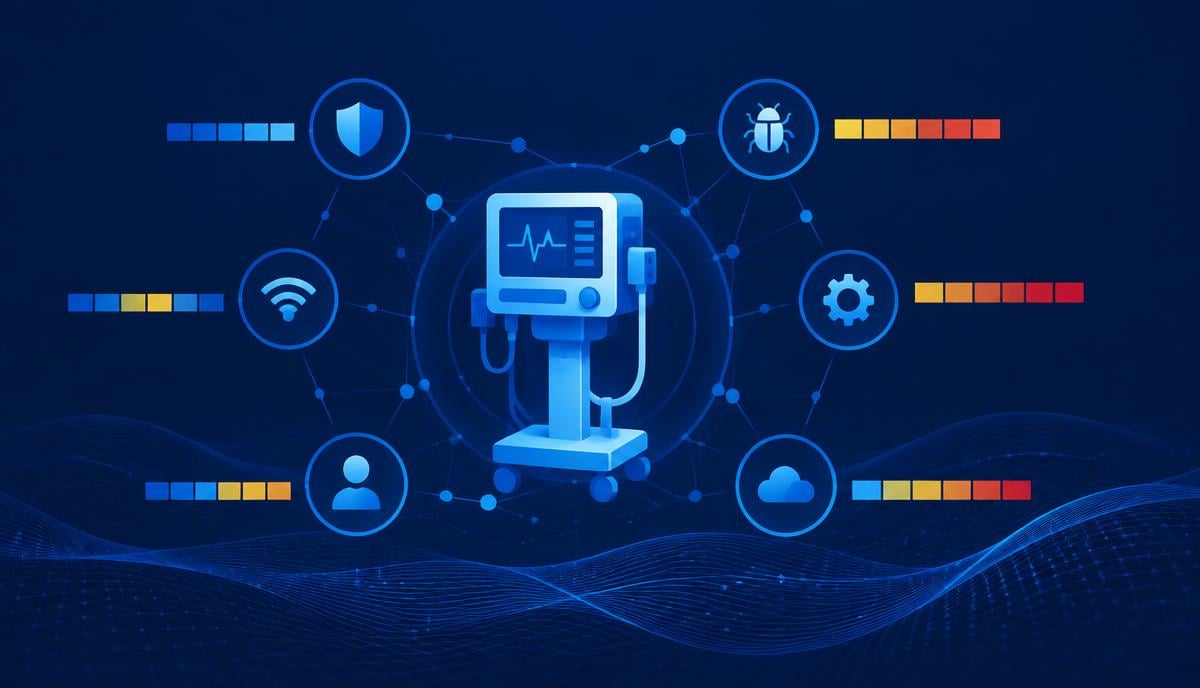
Here’s the practical part. Even if your product has nothing to do with “hacker culture,” handles show up around connected devices all the time—especially in the ecosystem (cloud, portals, APIs, support workflows).
1) Phishing and social engineering against engineering and support teams
Attackers don’t always send emails from “[email protected].” They use names and aliases that look like internal roles:
- BiomedSupport, FieldService, VendorTech, ClinicalOps
- Lookalikes like adm1n, supp0rt, cl1nical, serv1ce
If you only rely on basic keyword rules or human “glance checks,” these can slip through—especially when the email references real workflows (updates, RMAs, device provisioning, portal access).
2) Threat intel and incident response breadcrumbs
During investigations, handles can appear in:
- malware notes or embedded strings
- forum posts advertising access to “healthcare networks” or IoT footholds
- public repos or paste sites used to share tooling
- usernames in credential dumps tied to your environment
Even if the handle isn’t a confirmed identity, it can connect dots across events and help scope what you’re dealing with.
3) Vendor access and “service accounts” that quietly become the weakest link
MedTech ecosystems often include third-party entities, such as contract manufacturers, service providers, integration partners, cloud vendors, and hospital IT dependencies.
Handles become relevant when privileged accounts are named predictably (or reused) across customers and deployments. “service,” “maint,” “admin,” and “support” are magnets—because attackers know those accounts tend to have broad access and weak monitoring.
4) Device and platform logs that include usernames
Whether it’s Linux accounts, portal identities, API tokens mapped to a user, or support tooling logs—usernames and aliases are often the fastest “who/what” signal.
Bottom line: in MedTech, handles are less about culture and more about identity and access paths.
What MedTech teams should do about it (simple, high-ROI moves)
You don’t need a “handle strategy.” You need a sensible identity strategy that assumes attackers will try to look normal.
1) Stop using predictable privileged account names
If your environment still has accounts like admin, support, service, or maint, they should be treated as high-risk. Prefer named accounts, role-based access, and tightly scoped privilege.
2) Put stronger controls on support/vendor access than on ordinary users
Support workflows often bypass normal friction (“we need to fix it now”). That’s exactly why attackers target them.
- Enforce MFA everywhere (especially for privileged access)
- Use conditional access (location/device posture where possible)
- Time-bound elevated access (JIT/JEA concepts)
- Log and alert on new privileged accounts and role changes
3) Add detection for lookalike usernames (without being annoying)
“adm1n” isn’t advanced. But it works against teams that don’t monitor identity changes. Add simple detection for:
- new accounts with admin-ish names
- new accounts that resemble existing accounts (homoglyph / leetspeak variants)
- privileged actions by accounts that have never done them before
4) Treat “service mode” like production attack surface
If your device has maintenance pathways, debug tools, or special access modes, document them and defend them. In practice, this usually means authentication, authorization, logging, and a clean story for how service access is controlled in the field.
5) Use handles as investigation pivots—not conclusions
A handle alone doesn’t prove who did something. But it can be a useful pivot for IR: correlate the alias with timestamps, IPs, auth patterns, device IDs, and API activity.
FAQs
What is a hacker handle?
A handle is an alias used instead of a real name. In security communities it can be cultural, privacy-related, or operational (to hide identity).
Do handles matter in real incident response?
Sometimes. Handles can act as breadcrumbs across malware strings, forum activity, and reused identities. They’re best used as pivots for correlation—not as definitive attribution.
Why do threat actors reuse handles if they want anonymity?
Because reputation and trust still matter in underground ecosystems. Some actors compartmentalize with multiple handles; others “brand” a single alias.
How do handles show up in phishing campaigns?
Attackers often use names that look like internal roles—support, IT, vendor tech—or leetspeak lookalikes (adm1n, supp0rt) to slip past quick reviews.
What’s the biggest risk for connected medical devices?
Identity and access paths around the device: portals, APIs, vendor access, and service tooling. Attackers frequently target the ecosystem before touching embedded firmware.
Should medical device teams avoid using “service” or “admin” accounts?
Yes, where possible. Predictable privileged accounts are magnets. Use named accounts, least privilege, MFA, and logging for all privileged actions.
How can we detect suspicious new accounts without creating noise?
Alert on high-signal events: new privileged users, role changes, new logins from unusual locations, and first-time use of sensitive admin functions.
Are hacker handles the same thing as “usernames” in our systems?
Not exactly. But attackers often create or exploit usernames that function like handles—aliases designed to blend in, persist, or mislead humans and weak detections.
Want help hardening identity and testing your MedTech ecosystem?
Blue Goat Cyber helps medical device teams secure connected ecosystems—devices, apps, cloud, APIs, and support workflows—while producing clear evidence for premarket and postmarket cybersecurity programs.