
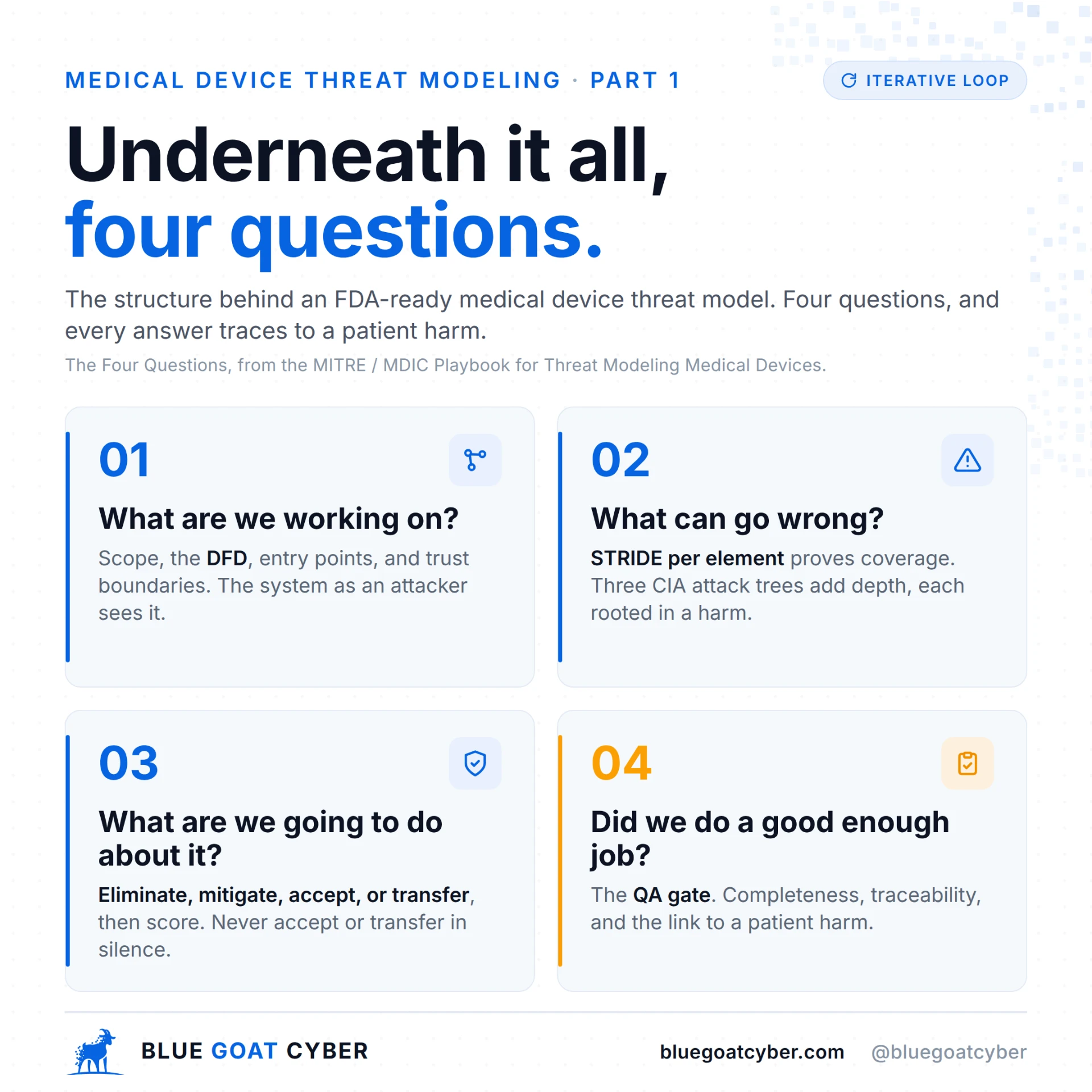
Threat Modeling
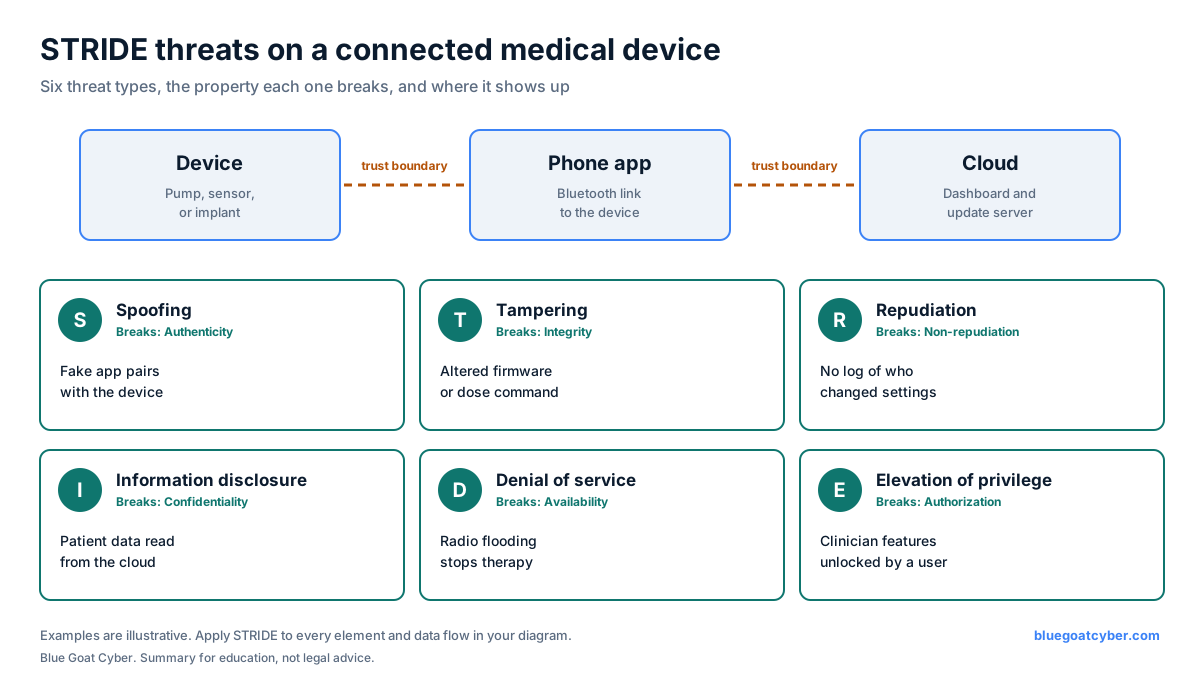
STRIDE threats on a connected medical device
The six STRIDE threat types, the security property each one breaks, and an example on a device, phone app, and cloud system.
What the graphic says
The full text version, so the content is readable without the image.
Six threat types
Examples are illustrative, on a device that talks to a phone app over Bluetooth and to a cloud dashboard.
- Spoofing (breaks authenticity)
- A fake app pairs with the device.
- Tampering (breaks integrity)
- Altered firmware or a changed dose command.
- Repudiation (breaks non-repudiation)
- No log of who changed settings.
- Information disclosure (breaks confidentiality)
- Patient data read from the cloud.
- Denial of service (breaks availability)
- Radio flooding stops therapy.
- Elevation of privilege (breaks authorization)
- Clinician features unlocked by a user.
Keep reading
More in Threat Modeling
Ready when you are
Secure your device before it reaches patients.
30-minute strategy session. No cost, no commitment - just answers from people who've supported 275+ FDA submissions, with zero cybersecurity rejections.