
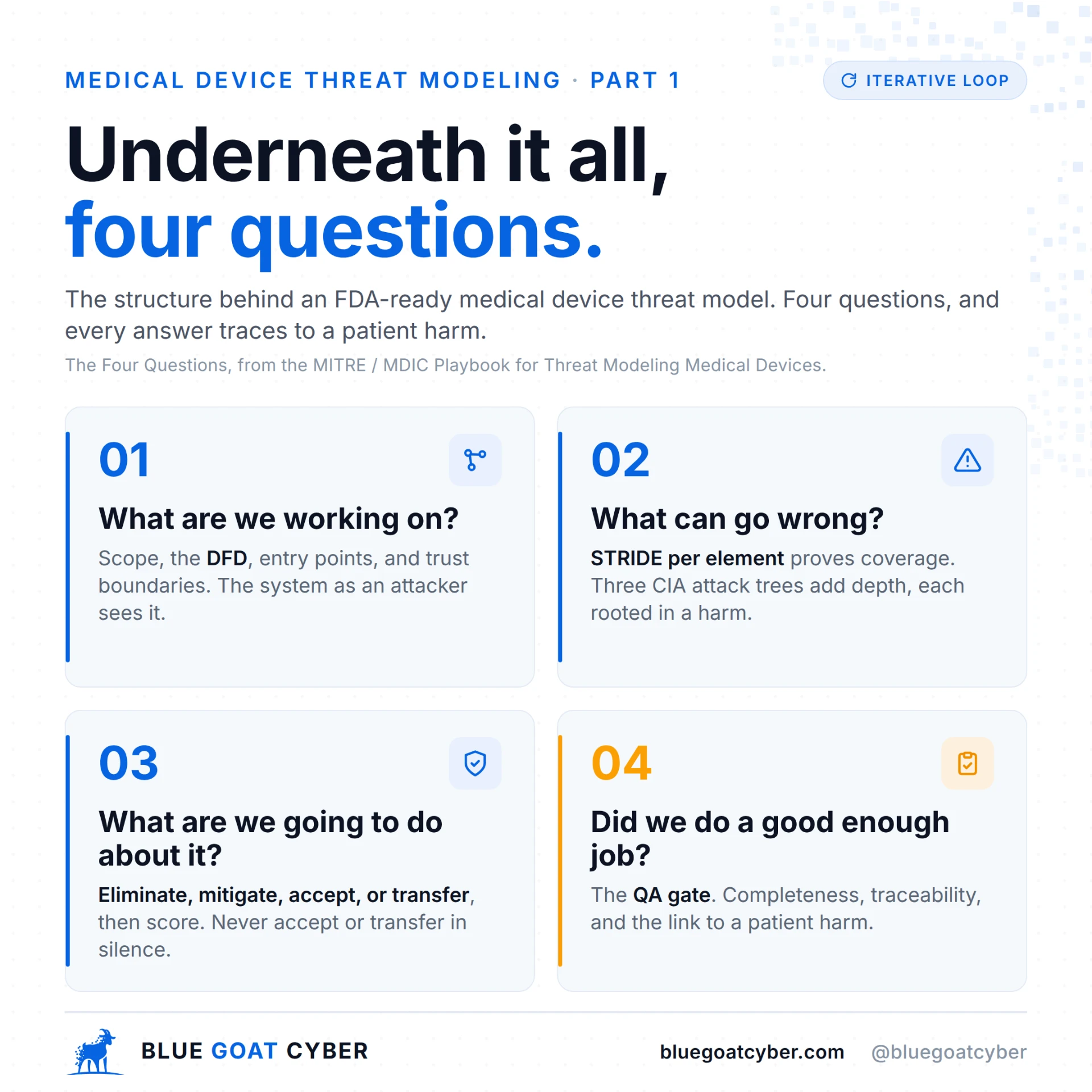
Threat Modeling · Part 3
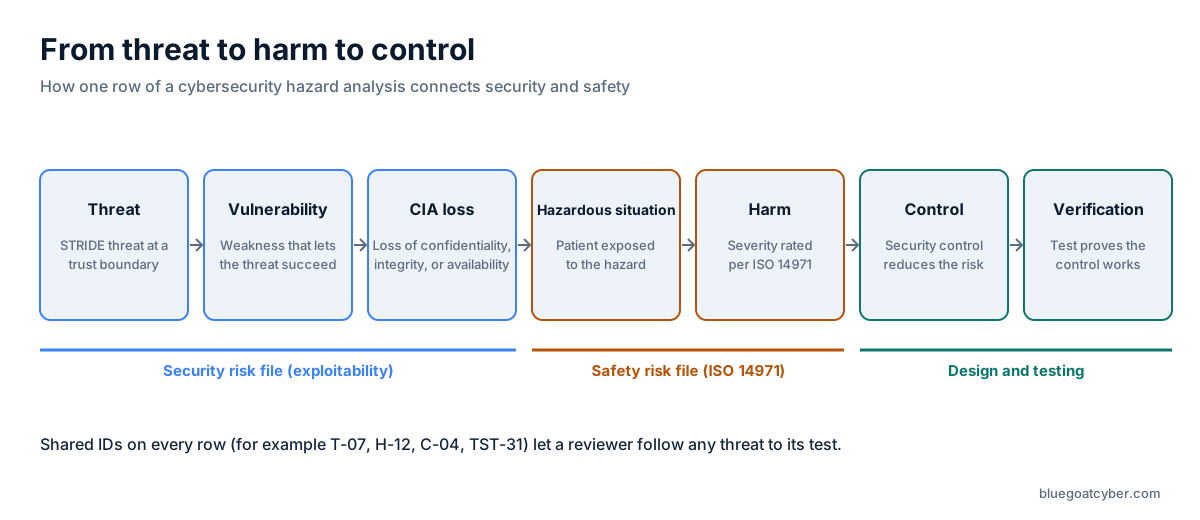
Cybersecurity hazard analysis: from threat to harm to control
How one row of a medical device cybersecurity hazard analysis links a threat to a patient harm, a security control, and the test that proves it.
What the graphic says
The full text version, so the content is readable without the image.
The seven links
How security risk (exploitability) and safety risk (ISO 14971) connect in one row.
- 1. Threat
- A STRIDE threat at a trust boundary.
- 2. Vulnerability
- The weakness that lets the threat succeed.
- 3. CIA loss
- Loss of confidentiality, integrity, or availability.
- 4. Hazardous situation
- The patient is exposed to the hazard.
- 5. Harm
- Severity rated per ISO 14971.
- 6. Control
- A security control reduces the risk.
- 7. Verification
- A test proves the control works.
Keep reading
Ready when you are
Secure your device before it reaches patients.
30-minute strategy session. No cost, no commitment - just answers from people who've supported 275+ FDA submissions, with zero cybersecurity rejections.