
FDA Regulation
Refuse to accept vs. hold letter vs. deficiency letter
What each FDA letter means, when it arrives, how long you have to respond, and what to do next.
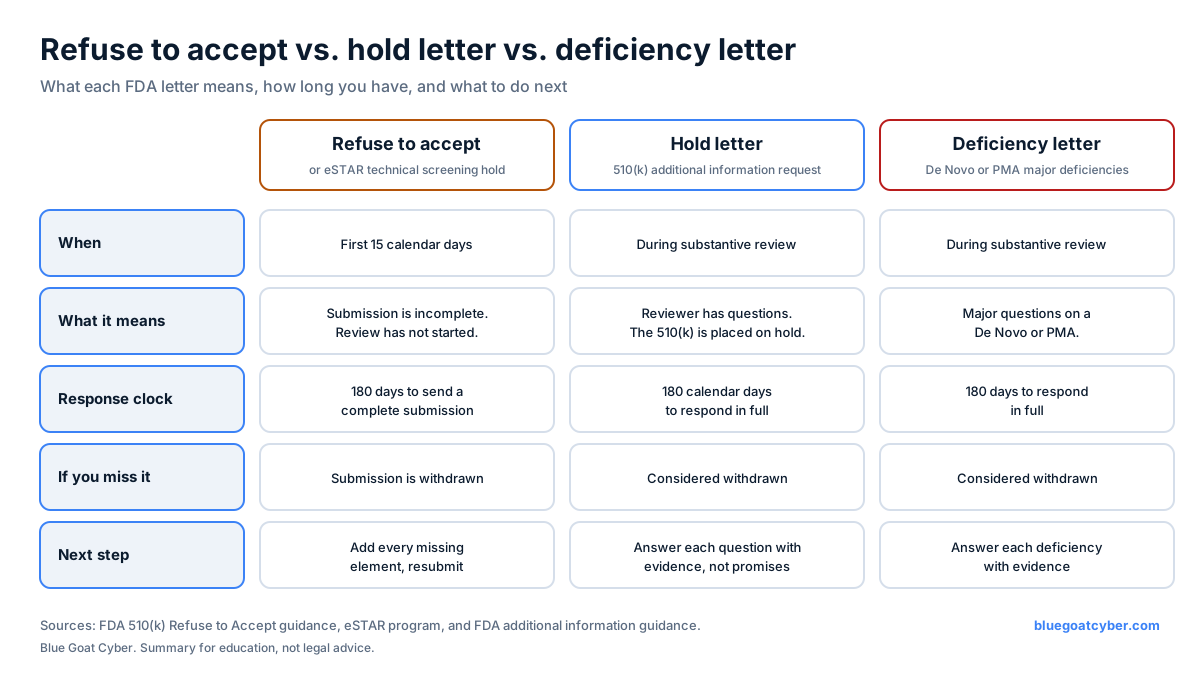
What the graphic says
The full text version, so the content is readable without the image.
Refuse to accept (or eSTAR technical screening hold)
- When
- First 15 calendar days after the FDA receives the submission.
- What it means
- The submission is incomplete and review has not started.
- Response clock
- 180 days to send a complete submission, or it is withdrawn.
- Next step
- Add every missing element and resubmit.
Hold letter (510(k) additional information request)
- When
- During substantive review.
- What it means
- The reviewer has questions and the 510(k) is placed on hold.
- Response clock
- 180 calendar days to respond in full, or the 510(k) is considered withdrawn.
- Next step
- Answer each question with evidence, not promises.
Deficiency letter (De Novo or PMA)
- When
- During substantive review.
- What it means
- Major questions on a De Novo request or PMA.
- Response clock
- 180 days to respond in full, or the submission is considered withdrawn.
- Next step
- Answer each deficiency with evidence.
Sources: FDA Refuse to Accept Policy for 510(k)s guidance, FDA eSTAR program, and FDA guidance on additional information requests.
Keep reading
Ready when you are
Secure your device before it reaches patients.
30-minute strategy session. No cost, no commitment - just answers from people who've supported 275+ FDA submissions, with zero cybersecurity rejections.